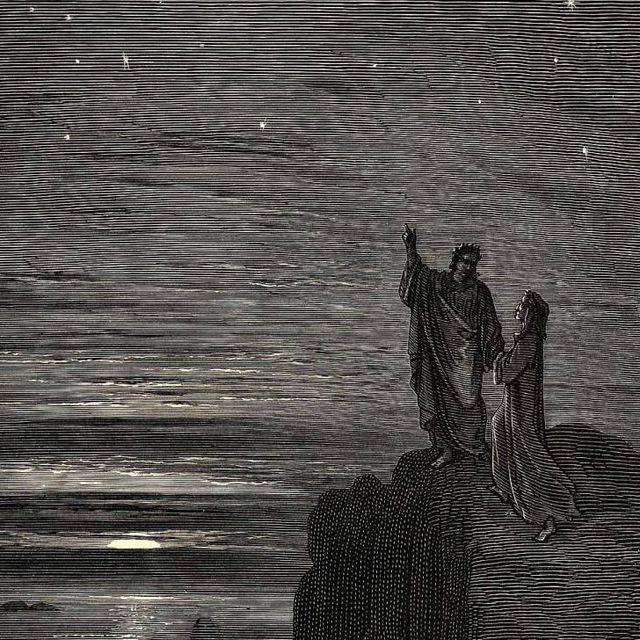
A true vision of our reality, only a traveler could capture.
On movement as practice
When traveling, no matter how intense it may be, I reflect on the states of mind I find myself in depending on certain circumstances.
The road has become a spiritual practice for me. Metaphorically speaking, it's easier to see how the world is passing by outside the car window when you're on the move. By immersing myself in this state, I learn to overcome my desire to be attached to the world.
The world is full of temptations that lead to suffering. Parting with people is especially acute on the road, but it's precisely these moments that are most instructive, and it's the subsequent state of loneliness that leads to important understandings.
Everything goes away eventually, but being able to enjoy the ephemeral is such happiness! That is what freedom is to me. To live like the wind.
Traveling the world = traveling through consciousness
Physical movement can be conceptualized as traveling through one's consciousness.
Traveling to the most remote and unknown places of the planet means traveling to the deepest depths of mind. The experience a person undergoes while traveling is changing, always unique, and — to some extent — depends on the location. People in non-touristy places think totally differently, and they hold a lot of uniqueness within, which means they can give unique knowledge, first and foremost about the observer.
Therefore:
- Traveling as a tool for self-discovery is ineffective without sufficiently intensive communication with people.
- When traveling, you should put yourself in different places situated far from your familiar culture, and interact with different social groups (the more diverse they are, the better). Moving around here means intensifying diverse experiences.
Everything is practice
Life is the rustling of leaves in the wind.
In the Zen tradition, roughly speaking, any activity that returns the mind to a "right" state can be called practice. Practice is not a special set of acts reserved for temples; it is anything that brings attention back to the present, that loosens the grip of narrative and self. In that sense, practice is plumbing and prayer, packing a bag and watching a train pull away.
Ask what Zen is and a true teacher will refuse the question; he might even answer with a rude gesture — because Zen is one of the few words our thin languages do not need to be boxed. The point is not to label it but to attend. Practice is the attention itself: the art of seeing without wanting to possess what you see.
I have always pictured Zen as the leaves of tall trees moving in wind. I dream of that rustle. Once, at two years old, I walked with my mother through an autumn city. The sun had not yet coaxed all the leaves from the branches. I stopped and looked up into the dense crown of a maple where sunlight leaked through rare gaps. I was astonished by the scene; the astonishment lodged in me like a memory of satori. Ever since, whenever light filters through a canopy in that way, thoughts drop away and the ego recedes. Who I am, where I am, what I want — those questions lose their urgency. There is a pure joy in simply being able to behold beauty without spinning it into narrative.
Practice can be as simple as watching trees grow. It can be a patient attention to how the world reaches toward light. Years of sitting and the slow work of meditation made it easier for me to call that state back. That is the quiet usefulness of repetition: it trains the nervous system to recognize and return to its native balance.
Travel is the same ground. For the wanderer, every detail of the road becomes a practice — packing, waiting, losing, learning a new name, tasting a strange fruit, watching a sunrise you will never post for anyone. If you travel to show, you travel with a second set of eyes focused on performance; that constant framing prevents the kind of deep imprint that stays with you. A flower does not compete with other flowers; it blooms for itself. So travel for the seeing, not for the trophy.
All words are clumsy. All preached knowledge is provisional. Live is being. Problems are not obstacles only; they are raw material for awakening. Ignorance has its blunt strength; knowledge has its own power. Nothing needs to be labeled to have value. You will invent stories about yourself and live inside them — and you will be right about them, for a while. The practice is to notice the story and not be ruled by it.
Outside my window there is war and plague, and yet we keep sitting zazen. Not as an escape, but as a discipline. Sitting calmly is its own resistance: a steady attention that refuses to be swallowed by panic. It is not denial; it is a practice that preserves the clarity needed for compassionate action.
This diary — the precursor to the channel — began in 2019 during a season I call Siberian asceticism. One of the first notes quoted Schopenhauer: come to every idea with your own mind. In that line I found a crack in the wall that let in Buddhism. Start with accepting how you are, look inward, admit your emptiness and your confusion, then think about what will concretely make life better. Notice patterns, the meaning in the people you meet, the small laws that shape your day. Attend to life and to yourself.
Everything on the road can be practice. The ordinary tasks, the long silences, the annoyances, and the small astonishments are all material. Keep your attention kind and steady. Practice will do the rest.
Everything I say is bullshit. Any knowledge is empty. Any word is useless. To live is to be.
Spiritual journey
The road inspires those chosen ones who have found themselves in wandering. It's the ultimate tool for spiritual practice and creative self-realization.
Those who have turned wandering into pilgrimage have come to know themselves. For such travelers, wandering is no longer a source of knowledge, let alone worldly pleasure, but a way to keep the mind in a certain state, similar to meditation, in order to achieve their spiritual goals.
You cannot travel for long periods of time solely for hedonistic purposes. You can do so for short periods, but seeking pleasure can turn out to be a trap that leads to deep disappointment and regret.
Be yourself.